

Bunk Bed Safety Guidelines
Bunk beds are fun and unique ways to accommodate more people in a smaller room footprint. They are also a great choice for homes with older children and teens.
Families with children typically prefer single bunk beds. They have twin beds on top and a standard double bed on bottom.
Space-saving Solution
Bunk beds are a fantastic option for smaller bedrooms to save space. They can help children feel more at ease and create a relaxing environment for sharing. A lot of bunk bed frames come with drawers that can be used for storing clothes, toys and other personal items. A single bunk bed is less expensive than two separate beds. This is especially the case when you take into account the price of furniture and mattresses.
There's a bunkbed that will suit your family, whether you're looking for a traditional twin-over-double bunk bed or something modern and unique. Some models even have a versatile trundle bed option which allows you to sleep a third person without taking up too much floor space. This is ideal for children who often have sleepovers, or for families that require a space-saving solution in their guest room.
When selecting a bunk bed, make sure you look for safety features such as a ladder and guardrails that are solid on the top bunk. Make sure that the mattress is comfortable and firm for a good sleep. Certain brands also come with an assurance for security.
In addition to being a practical solution for sleeping for small spaces, a bunk bed can also be a fashionable piece of furniture that will bring elegance to your home. Based on your preferences, you can choose from a variety of colours and styles to match your style. Bunk beds are also ideal for hosting guests and can be found in a variety of sizes, ranging from twin over twin to full over queen.
Another option that saves space is an L-shaped bunk bed. This design is perfect for rooms with limited area and can be tucked perfectly under an escalator. In contrast to standard bunk beds, the L-shaped version offers more privacy for each sleeping space. It is also suitable for children with smaller sized bodies who require more space to play.
If you want the most from your bunk bed, choose a model that is able to be converted into single beds. You can experience the pleasure of a bunk bed as your child gets older and then convert it into one or two beds when they are older.
Fun and unique
A bunk bed is often seen as a children's bedroom standard, a great space-saving device and a fantastic way to keep the kids content in the same room. But there's more to these amazing beds than that. They can provide kids with a unique and exciting sleeping experience, making bedtime a real adventure. They can also help create a shared space for study and play that's ideal for siblings sharing a room, or friends staying over.
Bunk beds are typically two twin or full-size beds that are stacked on top of one other. They are usually accessible via a ladder or stool, and guard rails are placed on the sides of the bunks to prevent children from rolling out of their beds. These are an excellent option for homes with limited space. They can also be easily disassembled to create separate beds.
Bunk beds are also designed with fun in mind, and they come in all sizes and shapes. Kids who enjoy creative design will adore these bunk beds, which can be designed as an airplane, race car or castle. Some bunk beds come with built-in storage units, as well as hidden places to foster a sense of mystery.
If you're looking to take your child's bed to the next level, consider a L-shaped bunk or a T-shaped loft bed. These beds can be used to create a second full or twin bed beneath a loft-style bed at an angle that is perpendicular to the original. They may not be able to take up as much space as traditional bunk beds, but they are a great option for adding additional sleeping space in a tiny room, and making it feel bigger.
The great feature of bunk beds is that they're designed to evolve with your children. As they age they'll appreciate the safety and security that a lower bed provides. With the ability to separate bunks and triple bunk beds, you don't have to worry about rushing out to buy new beds as your children grow out of them.
Three sleepers can be accommodated.
Bunk beds are not only attractive and fun but they're also an excellent way to accommodate siblings. Standard bunk beds are designed to fit single or super-single mattresses. They're great for rooms that share by two children. If your children are teenagers who prefer a larger layout there are bunk beds that can accommodate twin or even triple mattresses.
The most popular types of bunk beds are made of twin bed frames placed on top of one another however, there are different configurations available. Some manufacturers arrange the beds in an L-shape to save space, or create an angled unit that is perfect for smaller spaces. Some manufacturers construct double-decker beds with a queen-sized or king-sized mattress at the bottom and a single-sized mattress on the top.
Some bunk bed models are designed with stairs as well as ladders that can be moved to the side of the bed for quick access. When you are choosing a bunk bed, take security features into consideration and also how your kids will move up and down the stairs or ladder. You should also consider the ceiling's height and the overall size of the space. These factors will determine how high you can put the bunk beds.
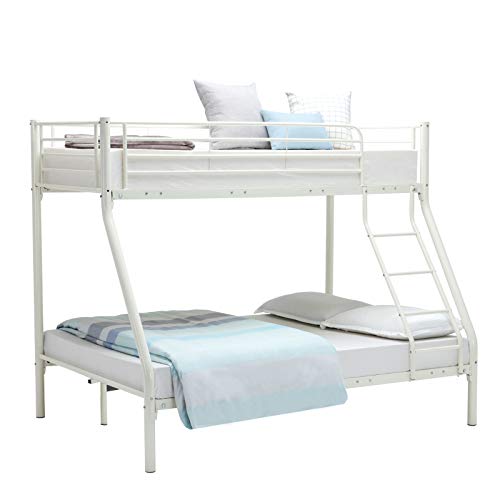
When looking for a bunk bed it is important to ensure that the safety rails are properly secured and aren't sagging or sagging. It's also recommended that the bedroom carpeted or, at a minimum have rugs beneath the beds to avoid serious injuries from falls. It's also a good idea to regularly check the bunks for any loose or missing components to ensure they're secure and sturdy.
Depending on the type of bunk bed you choose to purchase it is possible to include a futon or trundle to the design. This is a great choice for families with children older than who no longer share the same room or for those who have guests over frequently and require a spare bed. Metal bunk beds can include both a single mattress and futon to give you more flexibility. For instance DHP's Sammie twin-over-futon bed allows children to use the loft above as a single bed and the futon in the lower part as a larger mattress for sleep-overs or guests.
Safety
Bunk beds are ideal for saving space in a child's bedroom however they also pose a safety risk in the event that they are not utilized correctly. Most injuries resulting from bunk beds are preventable with the right information and following safety guidelines.
When using a bunkbed the most important thing to bear in mind is that they should only be used for sleeping purposes and not for other activities. Children should not climb on the bunk beds or under them. Only one person should be sleeping in the top bunk. Install a nightlight near the ladder, and make sure it's free of toys or other objects which could cause an accident. Children shouldn't hang anything from bunks. This includes belts and jumpropes.
In Bunk Beds Store UK to ensuring the bunk bed is assembled correctly, it is recommended to inspect the frame as well as the mattress support system regularly for signs of wear. It's important to take action immediately if you detect any swaying or creaking.
It is also crucial to select the right mattress for bunk beds. Different mattresses will sit at varying heights in the bed frames. The mattress shouldn't be more than four inches higher than the bottom bunk. This allows children to safely climb up and down the ladder without hitting their head on the guardrail.
The foundations of bunk beds are a further important safety element. They must be securely secured to the wall and constructed from sturdy materials. Make sure the bunk beds are checked to make sure there aren't any gaps between the frames and the foundations. They could cause danger to young children. Parents should teach their children to climb ladders and make sure that the bunk bed is free of clutter.
Bunk beds are a great way to maximize the space in the bedroom of a child while giving them the opportunity to play with their peers. To minimise the risk of injury, ensure they are positioned correctly and have sturdy stairs and ladders, and that you follow the guidelines of the manufacturer regarding weight limits.